
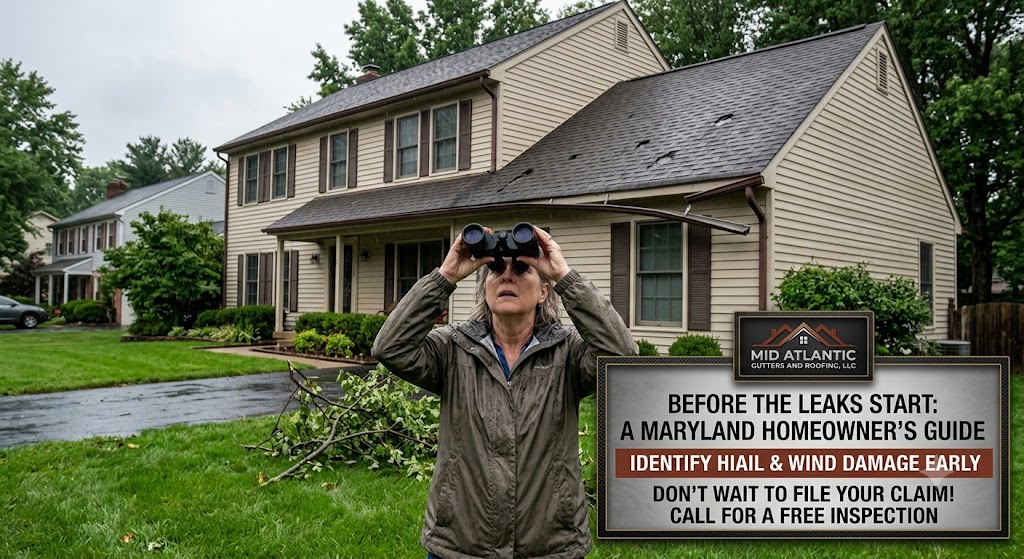
Central Maryland sees its fair share of volatile weather. From heavy winter ice storms to high-wind summer thunderstorms and unexpected microbursts, our home exteriors take a beating year-round. Whether you own a modern townhome in North Potomac, a classic colonial in Chevy Chase, or a sprawling estate in North Bethesda, your property is at risk when severe weather rolls through.
When a major storm moves through Montgomery County, your first instinct as a homeowner might be to check the ceilings upstairs. If there are no active drips or water stains, it is easy to assume your property escaped unscathed.
However, assuming your roof is fine just because it isn’t leaking yet is a dangerous trap.
Storm damage to roofs and gutters is often highly deceptive. It creates weak points that slowly decay your home over months, eventually turning into a costly emergency long after your homeowner’s insurance claim window has slammed shut.
To protect your home and secure your investment, here is a practical guide on how to spot the early warning signs of storm damage from the safety of the ground—and why acting quickly is essential for your wallet.
The Danger of Delayed Discovery
Most homeowners insurance policies require you to report storm damage promptly—typically within one year of the weather event.
If hail or high winds strike your home in Potomac or Rockville today, it might take 18 months for that compromised area to finally wear down and start leaking into your attic. By the time you notice the water spot, your insurance company may deny the claim because the storm occurred outside of their allowable filing window. You are then left footing the bill for a total roof replacement out of pocket.
Catching the damage early means you can file a valid, timestamped claim while the evidence is fresh.
🔍 The Post-Storm Inspection Checklist (From the Ground)
Safety First: Never climb onto your roof after a storm. Wet shingles, hidden structural weaknesses, and loose materials make it incredibly hazardous. Leave the high-climbing to a licensed, insured professional.
Instead, grab a pair of binoculars and walk the perimeter of your yard to look for these hidden signs of trouble:
- 1. Missing Shingles or Exposed Underlayment
- This is the most obvious sign of wind damage. Severe wind gusts can catch the edges of shingles, breaking their adhesive seals and ripping them away entirely. If you see dark, patch-like gaps on your roof or find pieces of shingles littering your lawn in Bethesda or Gaithersburg, your roof’s secondary water barrier is directly exposed to the elements.
- 2. Shingle Creases and “Wind Lift”
- Winds do not always tear shingles off completely. Often, gusts lift the shingle up, crease it across the top, and let it flap back down. From the ground, look for thin, dark horizontal lines near the edges of your shingles. These creases mean the internal fiberglass matting is broken. The shingle is structurally dead and will no longer shed water correctly during the next heavy rain downpour.
- 3. Missing Granules and Black Spots (Hail Dings)
- Asphalt shingles are covered in a layer of ceramic granules that protect the underlying asphalt from UV rays. When hail hits a roof, it leaves small, dark, circular impact marks where the granules have been blasted away.
- Where to check: Look at your downspout extensions. If you see a heavy accumulation of granules washing out onto your driveway or splash blocks after a storm, your shingles are rapidly shedding their protective coating.
- Asphalt shingles are covered in a layer of ceramic granules that protect the underlying asphalt from UV rays. When hail hits a roof, it leaves small, dark, circular impact marks where the granules have been blasted away.
- 4. Loosened Gutter Brackets and Sagging Sections
- Your gutters are an extension of your roofline, and they bear the brunt of heavy storm runoff, falling branches, and severe wind pressure. Check your gutter system for:
- Pulled-away brackets: Look for gaps between the back of the gutter and your home’s fascia board.
- Sagging or pitching issues: If a bracket has snapped or loosened, water will pool in the gutter rather than draining away. Standing water can back up directly under your lower roof shingles, rotting out the wood decking.
- Dents: Severe hail will dent metal components like gutters, downspouts, and valley flashing. If your metal gutters are visibly dented, there is a very high probability your shingles sustained impact damage too.
- Your gutters are an extension of your roofline, and they bear the brunt of heavy storm runoff, falling branches, and severe wind pressure. Check your gutter system for:
What to Do If You Suspect Damage
If you spot any of the warning signs above after a severe weather event in Germantown or Silver Spring, do not panic—but do not delay. Follow these steps to protect your home:
- Document Everything: Take clear, timestamped photographs of any debris on the ground, dented gutters, or visible roof anomalies from the ground. Note the exact date and time the storm occurred.
- Call a Local Roofing Expert First: Before you officially open a claim with your insurance provider, have a trusted, credentialed contractor perform a professional exterior inspection. They can safely climb the roof to document micro-fractures from hail and creased tabs that are impossible to spot from the ground.
- File Your Claim with Confidence: A reputable roofer will provide you with a comprehensive, itemized damage report accompanied by photo evidence. This documentation gives your insurance adjuster exactly what they need to process your claim smoothly and ensure your repair or replacement is fully covered.
Protect Your Investment
Your roof and gutters are your home’s first line of defense. Catching storm issues early prevents minor surface damage from turning into catastrophic structural rot, mold growth, or interior ceiling damage down the line.
Think your roof or gutter system might have sustained damage during the recent storms? Don’t wait for the leaks to start. Contact Mid Atlantic Gutters and Roofing, LLC today to schedule a thorough, no-obligation professional inspection and keep your Montgomery County home completely protected.